How to Design Market Stall Category Signs Shoppers Can Read
Plan a stall category sign with one clear headline, a short supporting list and a practical distance check. Compare layout and photo examples.
Market stall category signs tell shoppers what kind of goods belong at a stall before they stop to browse. A useful sign gives one category the largest type, adds a short supporting line if needed, and keeps other details out of the main reading path. Our ceramics and textiles examples use invented stall scenes and labels; treat them as design demonstrations and replace the categories with your own.
TL;DR
- Make one category the title of each sign.
- Keep the supporting item list short and secondary.
- Check the sign at the distance people will actually view it.
- Give prices their own tags; a category sign has a different job.
What should a market stall category sign say?
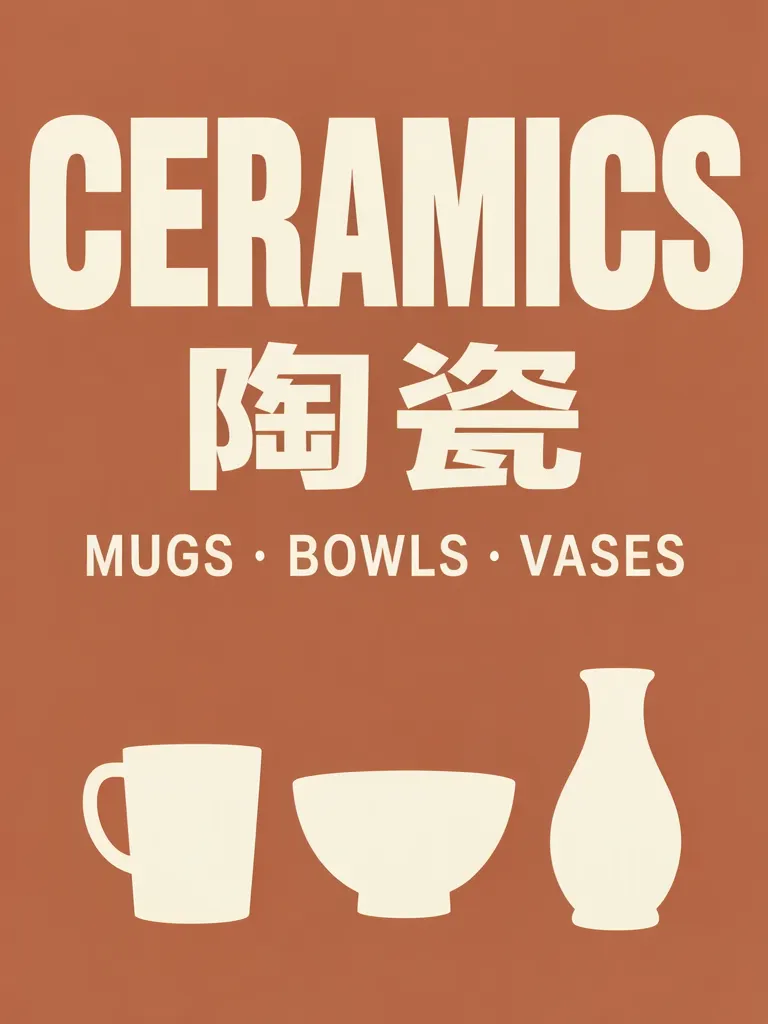
Start with the category name in the largest type. Add a second language or a short list only when it helps shoppers identify the range. Our ceramics example pairs “CERAMICS” with “陶瓷” and the smaller line “MUGS · BOWLS · VASES.” The textiles version uses “TEXTILES,” “布艺,” and “SCARVES · TOTE BAGS · CUSHIONS.” The main title names the category; the supporting words give a few examples.
Make one like this Open this image on MOSS Image
Made in the Layout Builder with these boxes:
| Box text / object | Job | Approximate position |
|---|---|---|
| CERAMICS | Main category | Upper area, across the width |
| 陶瓷 | Chinese category name | Below the English title |
| MUGS · BOWLS · VASES | Supporting examples | Lower middle |
| Mug, bowl and vase silhouettes | Visual cue | Lower area |
All three text lines came out right on the first try. The title fills the width, while the item list and simple silhouettes support it. The sign is a category marker, not a price list; a separate price tag can carry the item, amount and unit.
How does a hanging textiles sign work?
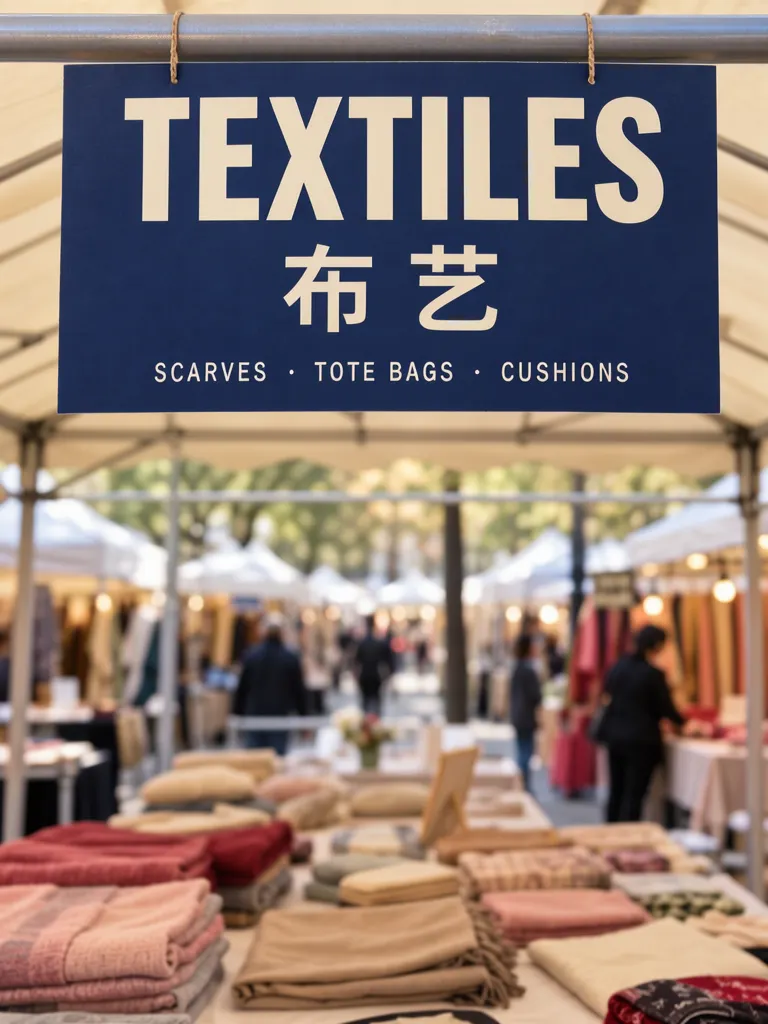
A category title can remain the main element even in a photograph of a real stall setup. The textiles example places a deep indigo sign across the front bar of a canopy, with folded fabrics beneath it. The English title is “TEXTILES,” followed by “布艺” and “SCARVES · TOTE BAGS · CUSHIONS.” All three lines were correct on the first try, and the fabrics have no labels. A distant stall has a small sign that is too blurred to read, so inspect the full scene as well as the main board.
Make one like this Open this image on MOSS Image
Made in prompt mode with this exact prompt:
Photograph of a printed category sign hanging from the front bar of a weekend market stall canopy, folded scarves and cushions on the table below softly blurred, other stalls far behind without signs, the sign flat and in sharp focus. Deep indigo board, cream type, the title huge and heavy across the full width, the Chinese word large below it, the item line small. The fabrics carry no labels or tags. The printed piece holds only the quoted text, and nothing else in view carries any writing: no other signs, labels, stickers or notes. Text, render exactly and add nothing else: title 'TEXTILES'; line '布艺'; small line 'SCARVES · TOTE BAGS · CUSHIONS'.
The ceramics design uses a clean flat layout; the textiles design adds a canopy and table context. Either can work for a single category. A price tag serves a different need: see farmers market price tags for pairing each price with its unit.
| Sign type | Main information | Keep secondary |
|---|---|---|
| Category sign | What kind of goods are here | A short selection of examples |
| Price tag | Which item, how much, and what unit | Decorative detail |
How can you tell whether the title is readable?
Print one copy at the intended size and walk back from it to the distance where shoppers will see it. The large title should remain the first thing you can identify. This real-world check is more useful than guessing a viewing distance or relying on a fixed letter-height rule, because stall layouts, lighting and audience positions vary.
Keep the main category to one short line if possible. If it wraps, test whether the phrase still reads as one category rather than separate unrelated words. Supporting lists should not compete with the title. For a bilingual sign, let both category names remain clear; reduce or remove the example list before shrinking the main words.
What should you proofread before putting it up?
Both examples had the required lines right on their first tries. Still, compare spelling and translation against your actual stock, and check that any listed examples are available at the stall. The textiles image includes a blurred distant sign; examine background areas if you plan to use a photo-like scene. For a physical display, check the final print in the stall’s light and from the approach shoppers use.
Category signs can become stale when the goods change. Update the examples when they stop matching the table. For prices, use separate tags and check every amount and unit; do not squeeze changing prices into the category headline.
How do you make a category sign for your stall?
- Choose one category and write its name as the headline. Add a translation or a few examples only if they help a shopper decide whether to stop.
- We used 3:4 portrait canvases. In the Layout Builder, give the category the largest box, put the translation below it and keep the item line smaller.
- For a stall photograph, use the AI poster generator. Quote the title and short supporting line, and describe the sign separately from fabric, products and background stalls.
- Print a draft, walk back from it, and check the category at the actual viewing distance. The JSON layout guide explains how separate boxes can keep a title and supporting text organized.
MOSS Image Studio is an independent hosted studio for the open MOSS-Image model. Not affiliated with OpenMOSS.
FAQ
What makes a market sign easy to read?
Use a short category title as the dominant line, keep supporting copy brief, and test a print from the distance where people will view it.
Should I put prices on a category sign?
Usually keep prices on separate tags so each amount stays attached to the correct item and unit. The category sign identifies the range of goods.
Should a market sign be bilingual?
Use two languages when they help your shoppers identify the category. Keep both category names readable and shorten the supporting examples if the space is tight.
How often should I update a category sign?
Review it when the range of goods changes. Remove or replace examples that no longer describe what is on the stall.
Try it with your own words
Open the Studio, write a brief or lay out boxes on the canvas, and generate with MOSS-Image.